
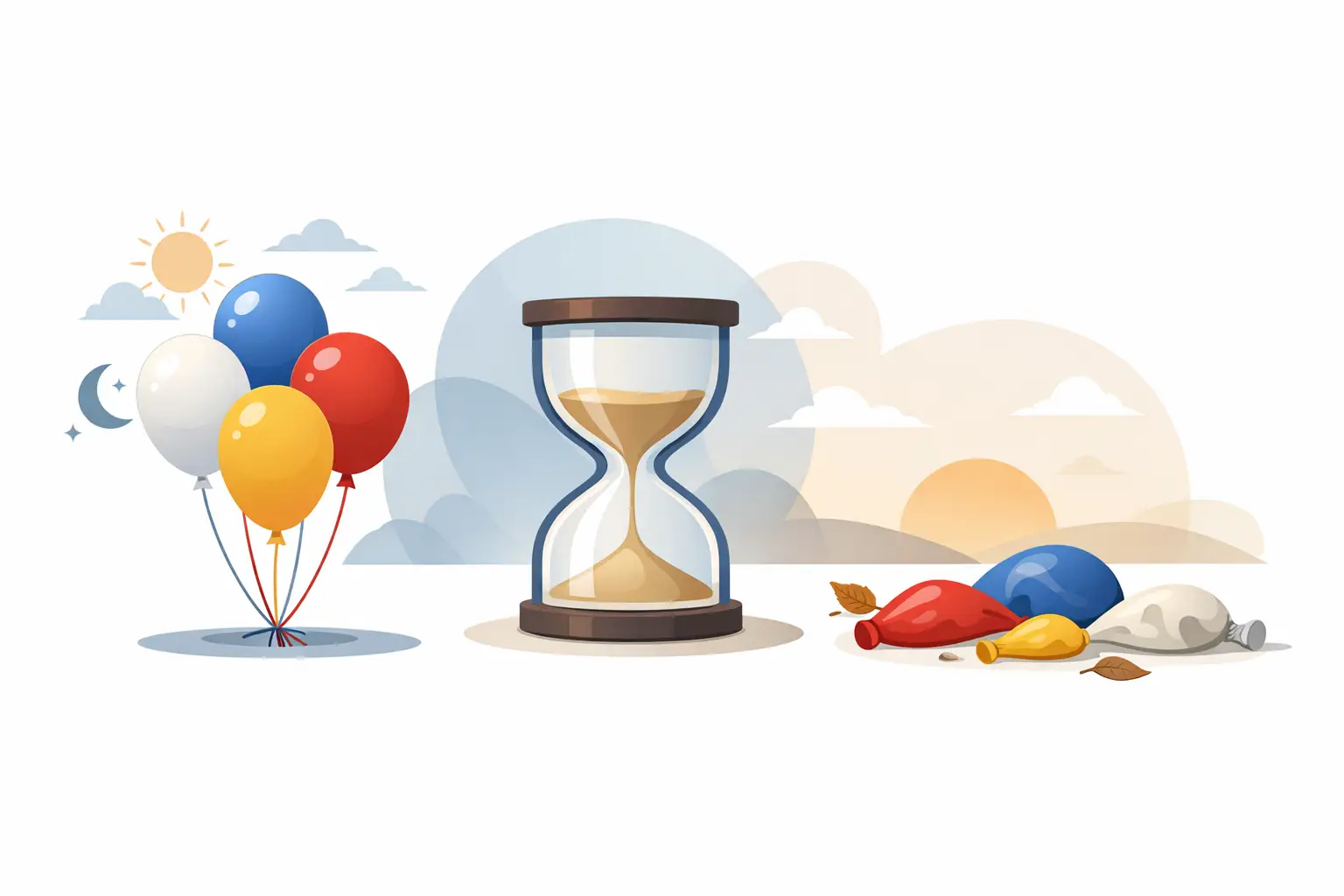
A balloon arch can look perfect at 9 a.m. and noticeably softer by dinner if the material, weather, and setup plan were wrong from the start. That is why one of the most common questions we hear is how long do balloons last – because timing matters just as much as design when you are planning a birthday, launch, dinner, or store activation.
The short answer is that balloons can last anywhere from several hours to several weeks. The real answer depends on what kind of balloon you are using, whether it is filled with helium or air, where it will be displayed, and how polished you need it to look for photos and guests. For event buyers, that difference matters. A balloon that is technically still inflated is not always event-ready.
How long do balloons last for different setups?
If you need a fast planning benchmark, helium latex balloons usually last 8 to 16 hours without special treatment. Helium foil balloons often last 3 to 5 days, and sometimes longer. Air-filled latex balloons can last several days to a few weeks indoors, while air-filled foil balloons can stay presentable for weeks.
That range is wide because balloons do not all age the same way. Some slowly shrink. Some oxidize and lose their shine. Some are affected more by heat than by time. If you are creating a premium event look, the better question is not just how long they stay inflated, but how long they stay photo-ready.
Helium latex balloons
Helium latex balloons have the shortest working life. Latex is porous, so helium escapes naturally through the material. In a climate-controlled indoor venue, standard helium latex balloons often look their best for about 8 to 12 hours. They may still float after that, but they usually start losing height and fullness.
With high-float treatment, they can last longer, often closer to 16 to 24 hours and sometimes beyond. Even then, results vary based on balloon quality, room temperature, and size. Smaller balloons generally drop faster than larger ones.
For morning events, same-day inflation is usually the safe choice. For evening functions, inflating too early can leave you with tired-looking balloons before guests even arrive.
Helium foil balloons
Foil balloons are much better at holding helium because the material is less porous. A standard helium foil balloon often stays afloat for 3 to 5 days, and in ideal indoor conditions, it can last a week or more.
That makes foil a practical choice for longer celebrations, welcome displays, hospital gifts, and branded balloon bouquets that need more shelf life. The trade-off is style. Foil has a more polished, graphic look, while latex often gives a softer, fuller event aesthetic.
Air-filled latex balloons
Air-filled latex balloons last far longer than helium latex balloons because regular air does not escape as quickly. Indoors, they can often hold their shape for several days and sometimes a few weeks.
This is why air-filled garlands, backdrops, and organic balloon styling are so popular for installations. You get more control, more durability, and fewer timing issues on event day. The catch is that latex can oxidize, especially in warm or humid conditions, which means the surface becomes more matte and cloudy over time.
Air-filled foil balloons
Air-filled foil balloons are the longest-lasting option for many decorative uses. They can remain inflated and presentable for weeks, especially indoors and away from direct sunlight.
They are ideal when you want letters, numbers, logos, or themed shapes to stay crisp across multiple days. For retail displays or staged decor with a longer run, this category usually gives the best lifespan.
What affects how long balloons last?
Material and fill method matter most, but they are only part of the story. The environment can shorten balloon life fast, sometimes by half.
Heat is one of the biggest troublemakers. When balloons sit in direct sun or a hot car, the air or helium inside expands. That can cause distortion or popping. Later, when temperatures drop, the balloons may look underfilled. In outdoor setups, this is a common reason displays change shape through the day.
Humidity also plays a role, especially for latex. In warm, humid conditions, balloons can oxidize faster and lose that fresh glossy finish. In a place like Singapore, that matters for outdoor parties, storefront decor, and event entrances.
Sharp surfaces, rough walls, grass, brick, and even certain ceiling textures can reduce lifespan as well. It is not always a dramatic burst. Sometimes it is a slow leak caused by friction during installation or transport.
Balloon quality matters more than many buyers realize. Premium balloons are more consistent in thickness, color, and durability. Cheaper balloons can deflate unevenly, show flaws faster, and create gaps in a design that looked full at setup.
How long do balloons last indoors vs outdoors?
Indoors, balloons almost always perform better. The temperature is steadier, there is less wind, and they are protected from UV exposure. A well-built indoor balloon garland or backdrop can stay attractive for days and sometimes longer.
Outdoors, the lifespan gets shorter and less predictable. Sun fades color and speeds oxidation. Wind puts stress on connection points and can rub balloons against each other until they pop. Rain and sudden temperature changes add more risk.
For outdoor installations, we usually plan for a tighter display window. A setup intended for a half-day event may still be the right choice even if the balloons could physically last longer. The goal is not to make them survive forever. The goal is to make them look excellent during the hours that matter most.
When should balloons be installed before an event?
This is where planning saves money and stress. Helium latex balloons are generally best inflated on the same day, as close to the event as practical. Helium foil can be prepared earlier, often a day ahead if storage conditions are good.
Air-filled decor gives you much more flexibility. Balloon garlands, columns, walls, and backdrops are often installed the day before an event, especially for indoor venues. That buffer can be valuable for corporate events, mall activations, and larger private functions where setup windows are tight.
Still, earlier is not always better. If the display needs to look crisp for close-up photos, we plan around peak presentation time, not maximum theoretical lifespan.
How to make balloons last longer
A few practical decisions make a visible difference. Keep balloons in cool indoor conditions whenever possible. Avoid direct sunlight, hot vehicles, and rough transport. Use quality materials and experienced installation methods, especially for larger decor builds.
For helium latex balloons, high-float treatment can extend floating time. For air-filled installations, proper sizing, spacing, and anchoring help reduce stress on the design. And if your event is outdoors, choosing the right color palette matters too. Some finishes and tones show oxidation faster than others.
This is one reason professional balloon styling is not just about shape and color. It is also about timing, material selection, and building for the actual venue conditions.
The best balloon choice for your event
If you need balloons to float for a dinner, launch, or birthday party, helium is the obvious choice – but know the time window. If you need a dramatic entrance feature, photo wall, stage backdrop, or retail display that holds up longer, air-filled decor usually gives better performance and value.
For one-day celebrations, a mix often works best. Helium bouquets add movement and festivity, while air-filled garlands and sculpted focal pieces carry the visual weight. For multi-day displays, foil and air-filled structures are usually the safer investment.
The right answer depends on the event format, venue, and the standard you expect. A casual family party and a branded corporate installation do not have the same tolerance for fading, shrinking, or surface changes.
At Artsyballoons, that is why balloon planning starts with the event brief, not just the color chart. A good installation should not only match the theme. It should still look strong when your guests arrive, when your photos are taken, and when the room is at its busiest.
If you are planning around a specific event date, the smartest move is to think about balloons as timed decor, not permanent decor. Choose the material and setup style for the moment you need to impress, and the whole event will feel more polished from the start.
Leave a Reply